
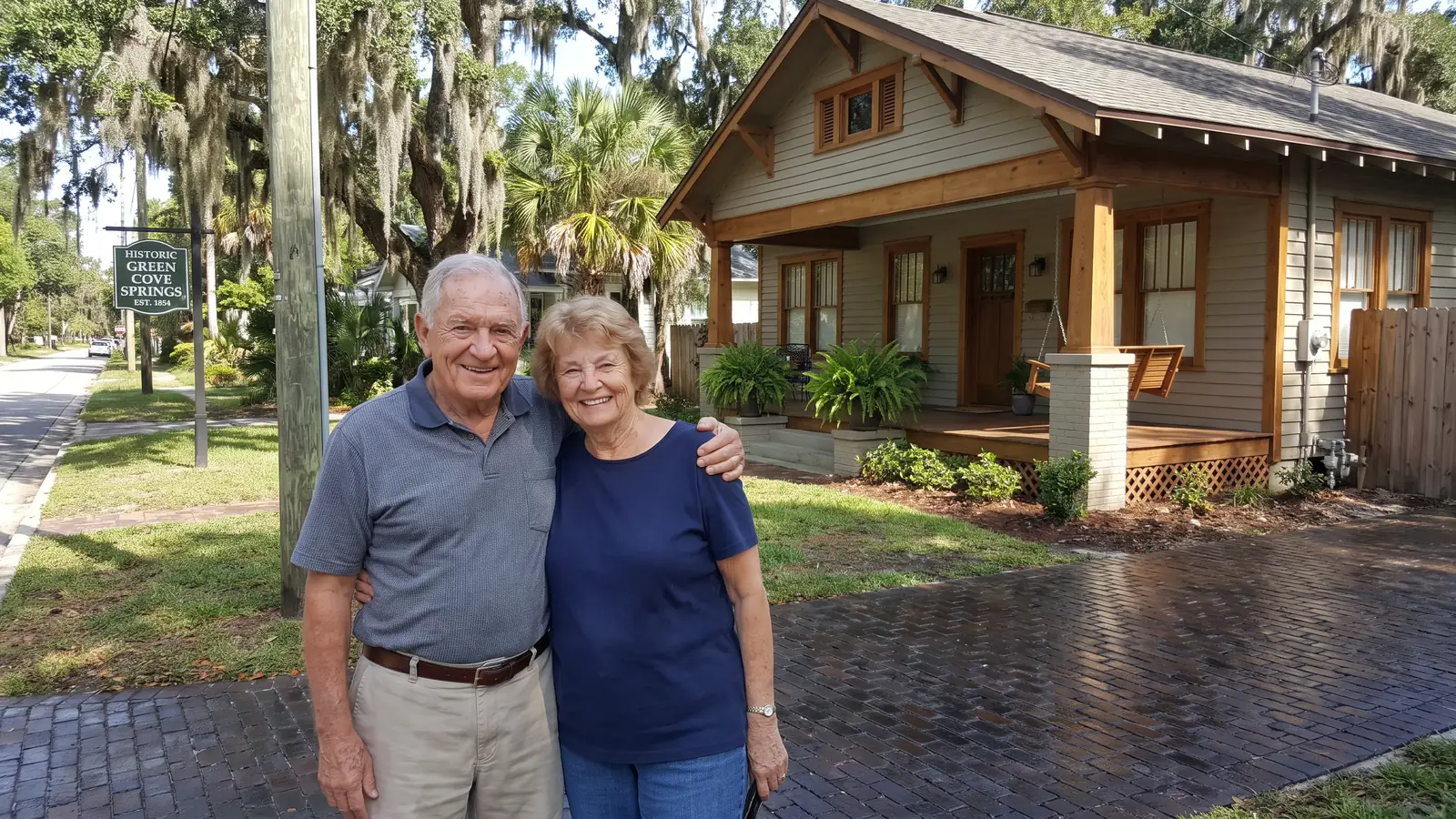
Protect pool deck stone from stains and chlorine
Travertine Sealing in Green Cove Springs, FL
Ask a local stone and paver contractor to look at your travertine and quote a sealer, at (904) 560-7217.
- Brings out deeper paver color
- Fresh joint sand helps lock pavers in place
- Gives weeds less room to grow
- Makes the surface easier to keep clean
- Free estimate, no obligation
Request a Free Estimate
Free, no obligation.
Can a contractor seal my travertine in Green Cove Springs, and how fast is the reply?
A local contractor takes travertine sealing jobs in Green Cove Springs, FL, and a reply comes inside 1 business day, and usually well before that. The visit and the estimate are free, and nothing obliges you to book. To start, call (904) 560-7217.
Travertine looks warm and cool underfoot, but it is a porous stone, and it soaks up whatever lands on it. Sealing slows that soaking so sunscreen, pool water and a dropped glass of wine are easier to clear. A contractor checks the stone, names the sealer and sets a price. To get yours, book a free estimate.
Does travertine around my pool really need a sealer?
Not by law, and not on every house. Travertine Mart, a stone seller, says a sealer can cut how much liquid the stone takes in, yet it will not make the stone stain-proof, acid-proof or free of upkeep. In other words, sealer buys you time to wipe up, and no more. Tell the contractor how the area is used when you call (904) 560-7217.
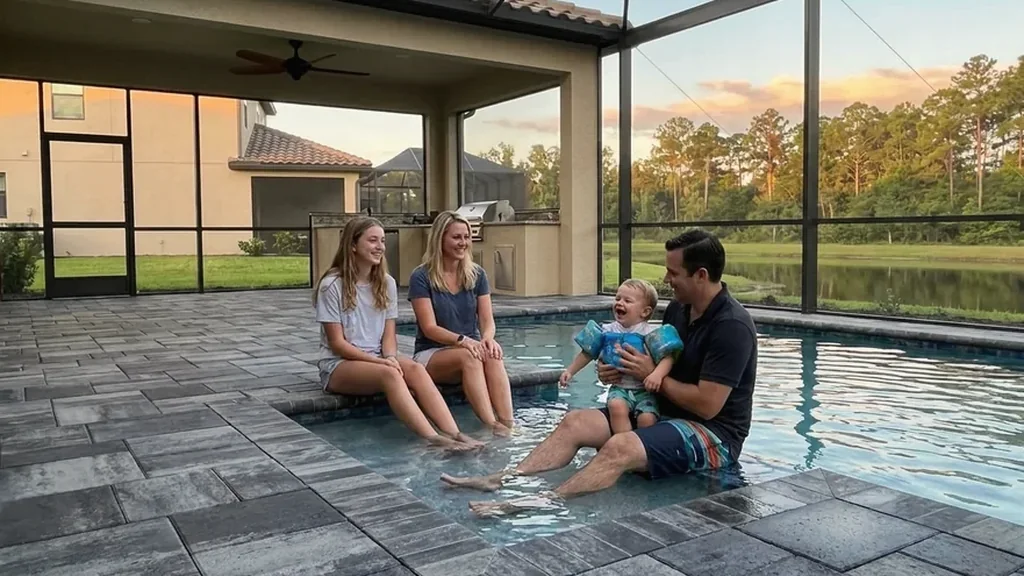
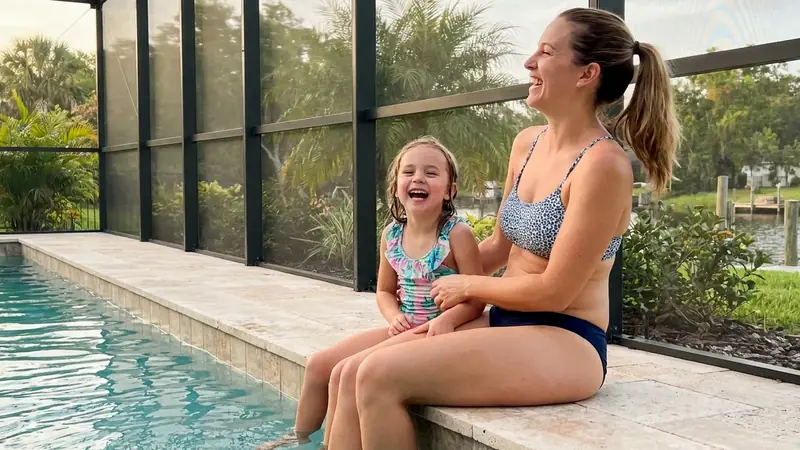
A pool deck is the hard case. Marblelife of Gainesville says travertine is naturally porous, so water, oils and grime soak in and leave dark or stubborn marks. A First Coast company adds that chlorine splash slowly erodes unsealed stone and joint sand, and that sunscreen and body oils sink into porous surfaces. If your travertine is a quiet front courtyard under cover, the case is weaker. To talk it through for your stone, book a free estimate.
Which sealer should go on travertine, and which should be avoided?
Ask for a penetrating sealer by name. Marblelife says penetrating products are the preferred choice for travertine because they soak in and leave no film, while surface coatings can peel or flake. One First Coast stone company uses a two coat, breathable system laid in crossing passes, and a First Coast guide agrees that penetrating products last longer than film-forming ones on this stone. For product names and label rates, call (904) 560-7217.
A wet look is a separate wish. Film-forming coats give it, but they sit on top of the stone and can trap moisture. Travertine Mart suggests testing any product on a sample first, because penetrating and surface coatings change the look in different ways. Ask for a test square in a spot you will not see often. To set one up, book a free estimate.
Penetrating sealer
Soaks into the stone, leaves a natural look and lets moisture escape. This is the usual pick for travertine.
Film-forming coat
Builds a layer on the surface for a wet look. On travertine it risks peeling, and it can turn slick around a pool.
Satin or low sheen
Keeps footing close to the unsealed stone. A Clay County stone company lists satin as its default.
Traction additive
A clear grit mixed into a coat adds grip. A First Coast guide prices it at $0.15 to $0.30 per square foot.
Will a sealed travertine deck feel slick when my feet are wet?
It depends on the finish, so settle that before the day of the job. A First Coast company says glossy sealers with no traction additive get dangerously slippery when wet, and it cites a wet friction figure of at least 0.60 for a properly formulated additive. Slip is the main safety point on any pool deck, whether the stone is travertine or concrete pavers. Ask to see the product wet, and call (904) 560-7217 if the answer is vague.
Why do contractors wash travertine more gently than concrete pavers?
Because the stone is softer and reacts to acid. A Clay County stone company washes with soft equipment under 1,200 PSI through fan tips, and a First Coast company puts its low pressure rinse under 500 PSI and says high pressure etches and pits travertine. Marblelife warns against vinegar and other acids that damage the stone and wear down the sealer. Ask which pressure and which cleaner the contractor plans before you book a free estimate.
Unilock, a paver maker, lists travertine with marble and limestone as acid-sensitive and says to use an alkaline cleaner after a test on a small, hidden area. Travertine Mart adds that acid can etch carbonate stone even when it is sealed, so a spilled soda or a pool acid splash matters either way. The clean comes first and sealer goes on only when the stone is dry. To book a gentle wash and seal, call (904) 560-7217.
What is done about the holes in my travertine?
Many pavers come with small pits that were filled at the factory. Over time some of that fill falls out. A First Coast stone company counts the failed holes before it starts and offers refilling as an optional step done ahead of sealing, so the sealer does not run into open pits. If you see gaps or rough patches in the surface, say so when you book a free estimate.
How long until I can walk on it and swim again?
Plan on a day or two off the stone and about three days before a full cure. One Northeast Florida stone company lists foot traffic after 4 to 6 hours, pool use after 48 hours and a full cure at 72 hours, with moisture meter readings taken first and surface dryers used on humid days. A First Coast guide also says to test pool water before and after cleaning, since some cleaners can change pool chemistry for a short time. Ask the contractor for the product label times when you call (904) 560-7217.
How often should travertine in Green Cove Springs be sealed again?
Published answers disagree, which says the stone and the use matter more than the calendar. Marblelife of Gainesville says many Gainesville homeowners reseal every 1 to 3 years, and a First Coast company says to clean travertine twice a year and reseal every 3 to 5 years. Coastal decks in that guide often run on 2 year cycles. Sun, pool use and shade shape yours. To plan a check, book a free estimate.
A water test is the simple signal. Marblelife says that if a splash darkens the stone fast and soaks in instead of beading, the sealer may be wearing away. Stains that are harder to remove and dullness after a wash point the same way. When the stone passes that test, you can wait. If it fails, call (904) 560-7217.
Do river air, shade and the spring change how stone wears in Green Cove Springs?
Some, though not in the way people expect. The city sits at about 16 feet of elevation on the St. Johns River, and the town takes its name from a spring beside the water whose sulfur-scented flow feeds a public pool. Stone near the water or under oaks stays damp longer, which invites green film, so a damp lanai floor gets attention first. To have a shaded or river facing area looked at, call (904) 560-7217.
The town was set up in 1854 and grew from 6,908 people in 2010 to 9,786 in 2020, so many homes with stone lanais are newer builds. New stone and new joints need time to settle before a coat. Say when the stone went in when you book a free estimate.
Which parts of my yard use travertine?
Pool decks come to mind first, though lanai floors, entry courtyards, steps and walkways all use it. Each sees different wear, so each gets its own plan. Point to the spot that bothers you most when you call (904) 560-7217.
Pool deck and coping
Chlorine splash, sunscreen and bare feet. Footing and stain protection both matter here.
Screened lanai
Shade and damp air bring green film, and furniture legs leave marks.
Entry courtyard
Mulch, soil and planter drips mark light stone, and guests see it first.
Steps and walks
Wet leaves and tannins stain, and a slick finish raises the fall risk.
What does travertine sealing cost in Green Cove Springs?
A First Coast company lists $2.00 to $3.50 per square foot to seal travertine and natural stone, against $1.50 to $2.50 for paver pool decks. Smaller, odd shaped decks run toward the top of a range, and a cleaning-only visit for a 400 to 1,000 square foot deck is listed at $200 to $600 by the same company. For a number on your own stone, book a free estimate.
Stripping a failed coat adds $1.50 to $3.00 per square foot in that guide, and holes and a traction additive come on top. Another First Coast company warns that quotes far below its range tend to skip prep, so ask what a low bid leaves out. Compare any bid with the table and call (904) 560-7217 to talk it through.
Looking at concrete or brick instead? Read about paver sealing, paver cleaning, or go back home to paver sealing in Green Cove Springs.
| Stone area | What it might be | Travertine sealing at $2.00 to $3.50 |
|---|---|---|
| 200 sq ft | Lanai floor or entry courtyard | $400 to $700 |
| 400 sq ft | Pool deck on one side | $800 to $1,400 |
| 700 sq ft | Pool deck around a screen enclosure | $1,400 to $2,450 |
| 1,000 sq ft | Deck, lanai and walk together | $2,000 to $3,500 |
The $2.00 to $3.50 per square foot rate for travertine and natural stone comes from a First Coast company's pool deck guide, read in November 2026. The same guide lists $1.50 to $2.50 for paver pool decks, and a second page from that company says natural stone costs more than brick or concrete because it needs a gentler chemical. Stripping an old coat (add $1.50 to $3.00), filling holes and a slip additive (add $0.15 to $0.30) are extra. Your own quote may differ.
What is the travertine sealing process, start to finish?
Six steps cover most jobs. Ask which of them are in your quote, and call (904) 560-7217 to hear how the contractor orders them.
1. Look and test
The contractor checks the stone, counts failed holes and tries the sealer on a hidden square.
2. Gentle wash
Soft washing at low pressure and an alkaline cleaner that suits acid-sensitive stone.
3. Dry out
Moisture readings first, with blowers or dryers on humid days, so sealer never goes over damp stone.
4. Fill and sand
Failed holes are refilled if the quote includes it, and joints get fresh sand.
5. Two thin coats
A penetrating sealer in crossing passes, wiped even, with a traction additive if you ask for one.
6. Walkthrough
Cure times, pool re-entry and the product name and date, which Travertine Mart suggests keeping on file.
Does a contractor cover my part of Clay County and beyond?
Free estimates are open across Green Cove Springs and the towns below, from Clay County to Duval, St. Johns and Putnam counties. Every town has a page of its own. If your street is missing, call (904) 560-7217.
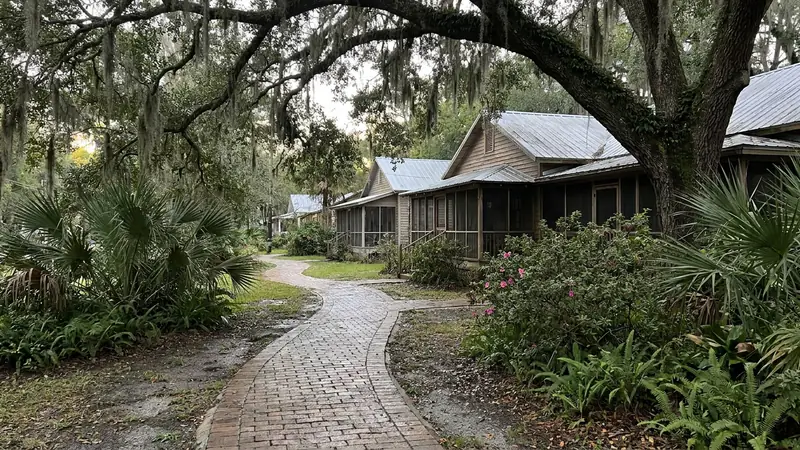
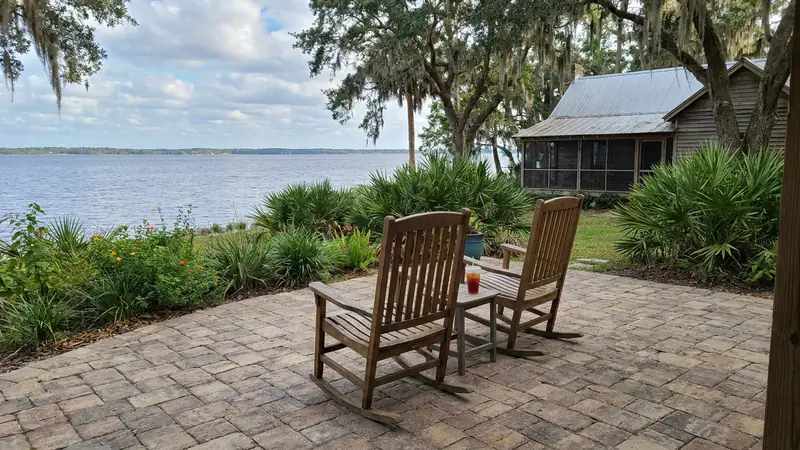
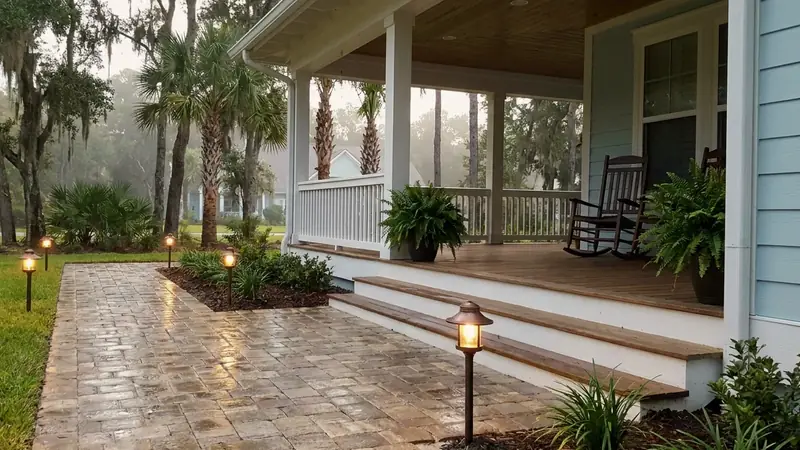
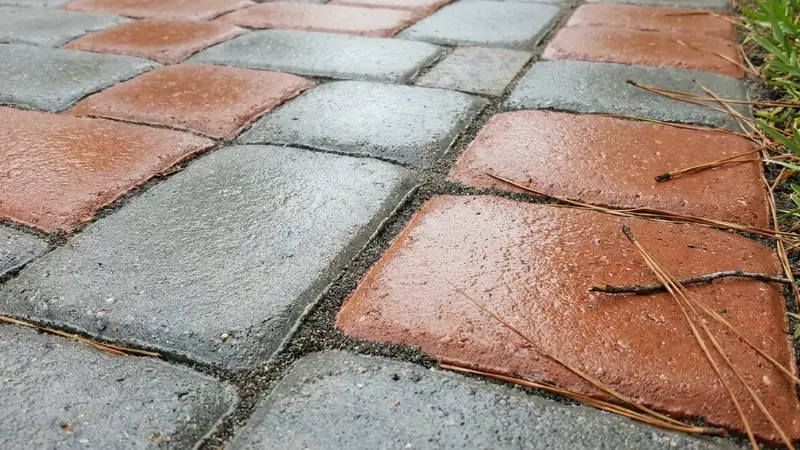
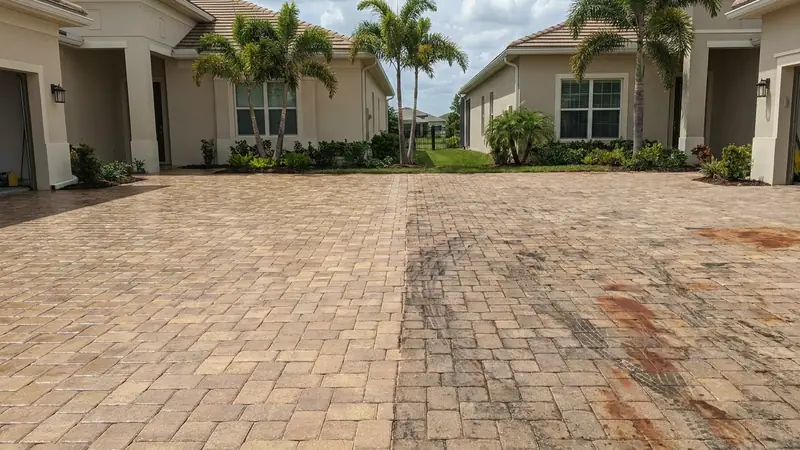
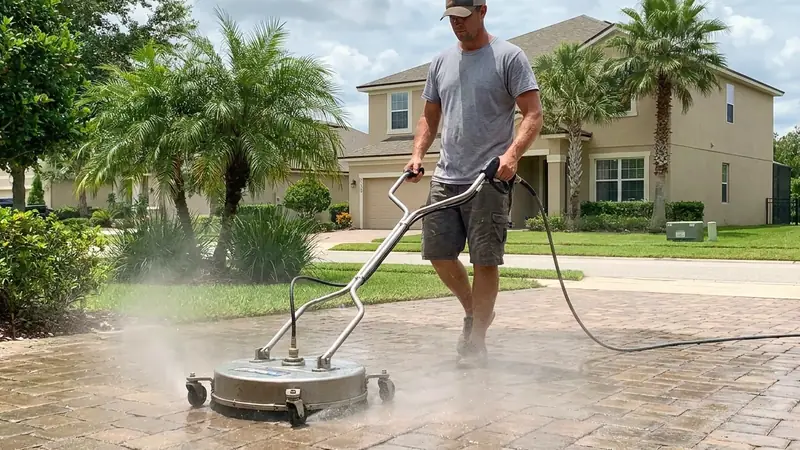
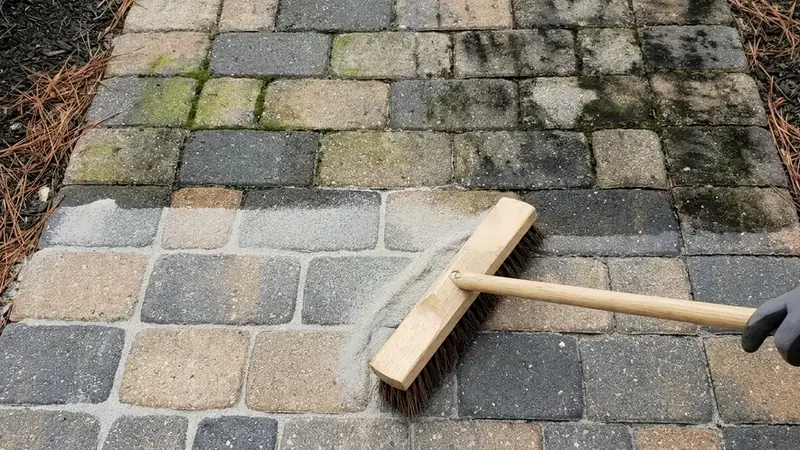
What does sealed natural stone look like around Green Cove Springs?
What do homeowners ask about sealing travertine?
Pool safety, price and how long the coat lasts come up most. Quick replies follow, and the phone is (904) 560-7217 for anything not covered here.
Do you need to seal travertine tiles?
It is a choice, not a rule. A travertine seller says a suitable sealer can reduce how much liquid the stone absorbs, but it does not make the stone stain-proof, acid-proof or maintenance-free. Around a pool, where chlorine, sunscreen and wet feet are constant, the case for a coat is stronger.
How much does it cost to clean and seal travertine tile?
A First Coast company lists $2.00 to $3.50 per square foot to seal travertine and natural stone, so a 400 square foot pool deck lands near $800 to $1,400. Stripping old sealer, filling holes and adding a slip additive cost extra. No local page lists a price that covers every extra, so ask for the add-ons by line.
How much does it cost to seal travertine pavers?
The same published range applies, $2.00 to $3.50 per square foot, which is higher than the $1.75 to $3.25 one First Coast company posts for clean, sand and seal on concrete pavers. The gap comes from gentler chemicals and slower work on natural stone.
What to seal travertine pavers with?
Contractors reach for a penetrating sealer. Marblelife of Gainesville says penetrating products soak in without a surface film, and that film-forming coats can peel or flake on travertine. A First Coast company also favors penetrating products around pools. Ask the contractor to name the product and its label.
What do professionals use to seal pavers?
A pump sprayer and a roller or back-brush are the usual tools, with the sealer chosen for the stone or paver underneath. One Northeast Florida stone company applies two thin coats of a breathable penetrating sealer in crossing passes on travertine.
Is it good to seal pavers in Florida?
For most pavers, yes, because sun, storms and humidity all wear on them, and a coat slows that wear. For travertine, the question is about stain and chlorine protection more than shine. Either way the repeat cost is real, so ask how long the coat should last.
Will sealing make my travertine pool deck slippery in Green Cove Springs?
It can, if a glossy film is chosen. A First Coast company warns that high-gloss sealers without a traction additive turn slippery when wet, and a First Coast stone company says its default finish is satin so slip resistance stays unchanged. Ask for a low-sheen penetrating product and say you want to see it wet.
How soon can we swim after travertine is sealed?
One Northeast Florida stone company gives 4 to 6 hours before foot traffic, 48 hours before pool use and 72 hours for a full cure. Your product label has the final word, and rain pushes those times back.
Does the spring water in Green Cove Springs hurt stone?
The city's spring runs sulfur-scented water into a public pool, but that is the spring itself and has no link to the water at your home. Stains on your stone more often come from irrigation iron, pool chemicals and sunscreen than from anything in the town's spring.
Which other paver services can I book in Green Cove Springs?
Ready to protect your travertine?
Ring the number or send the short form, and expect a contractor to reply inside 1 business day, usually much sooner.
Free, no obligation