
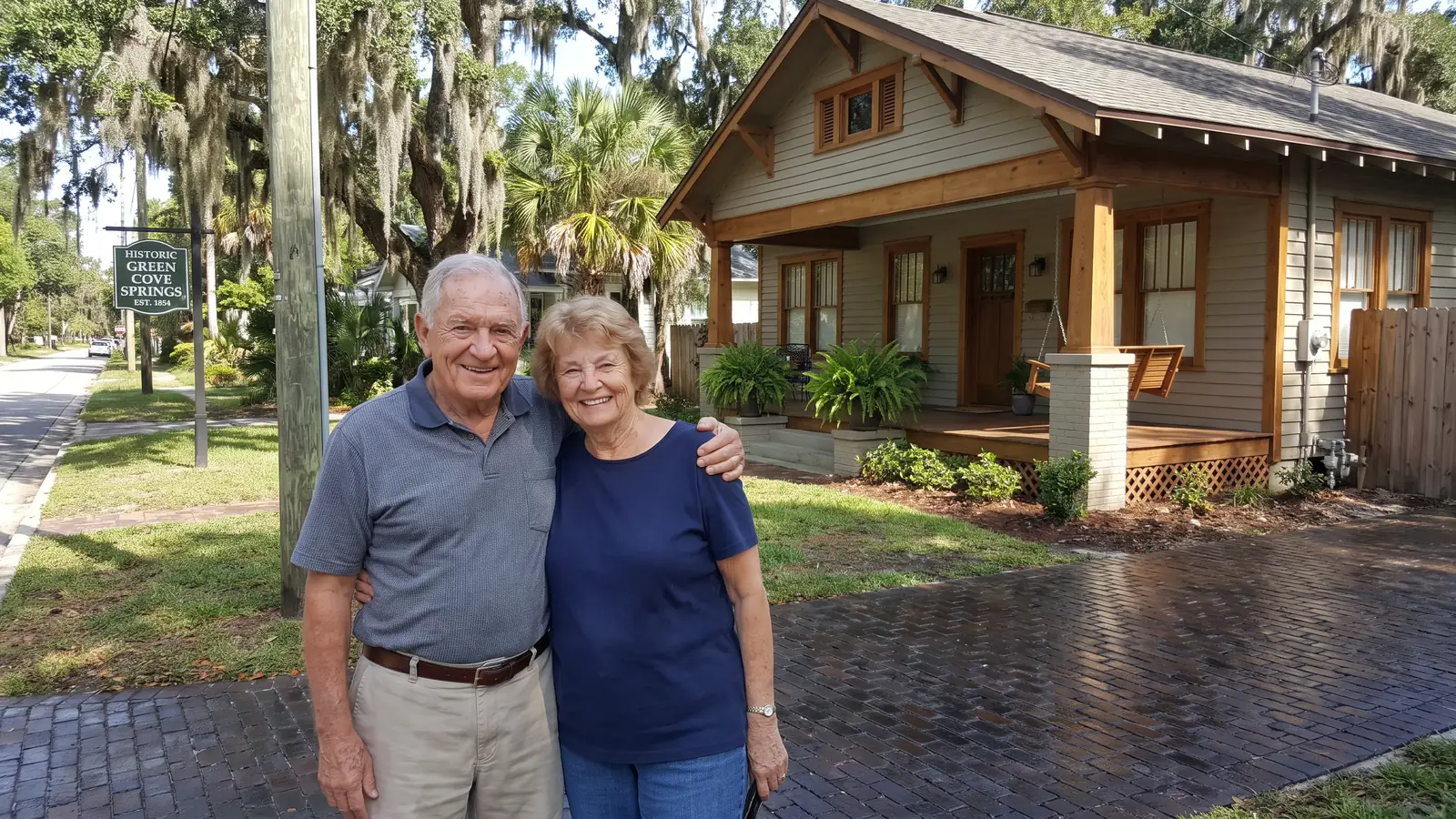
Paver sealing for St. Augustine homes
Paver Sealing in St. Augustine, FL
In St. Augustine, Fullerwood Park's edge curves along Hospital Creek; call (904) 560-7217 for a free paver sealing estimate.
- Brings out deeper paver color
- Fresh joint sand helps lock pavers in place
- Gives weeds less room to grow
- Makes the surface easier to keep clean
- Free estimate, no obligation
Request a Free Estimate
Free, no obligation.
Fast, careful paver sealing in St. Augustine
If your driveway, courtyard or pool deck in St. Augustine needs paver sealing, a local contractor can give you a free estimate. The work runs from a wash to new joint sand to a coat of sealer. Go ahead and book a free estimate, and someone gets back to you within 1 business day, usually much sooner.
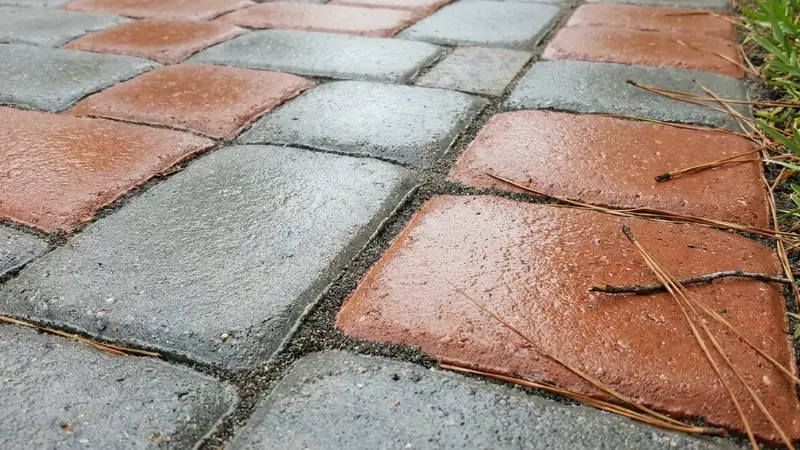
Think of the red pavers by your garage gone orange-gray, with a dark green line along the shaded edge. Washed, re-sanded and sealed, they read as one color again, and rain beads off the top. If you want to talk it over first, call (904) 560-7217.
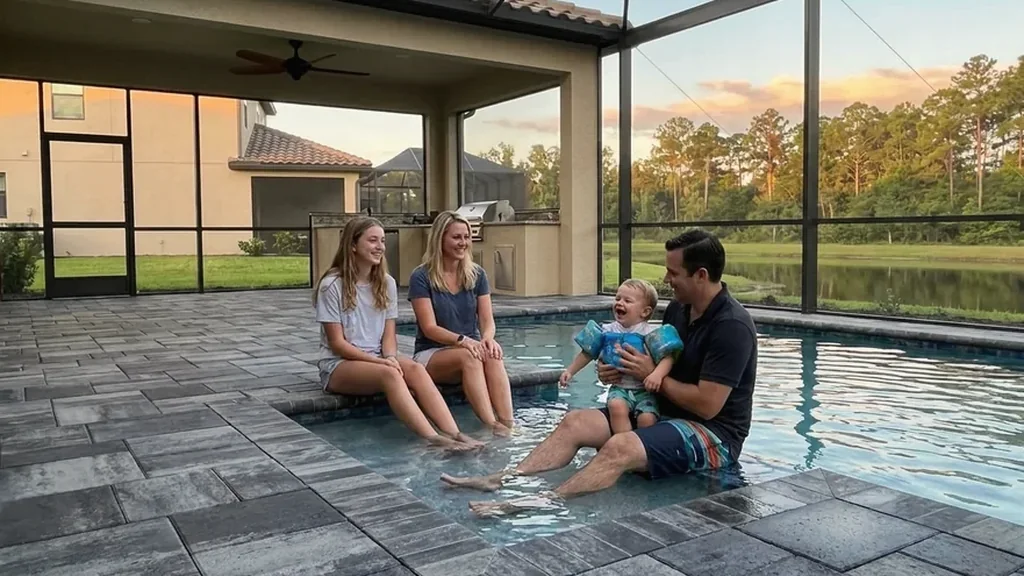
Why hire a local paver sealing contractor in St. Augustine?
Tides, old masonry and historic rules can all change a job in St. Augustine, which is where a local contractor earns trust. To see what applies to your street, book a free estimate.
Free estimate, no strings
The contractor looks at your St. Augustine pavers and quotes the job for free. You are under no obligation to book.
A published price range
Posted prices from Northeast Florida companies sit near $1.75 to $3.25 per square foot for a clean, sand and seal. Use it to check any St. Augustine quote.
Old stone gets extra care
Coquina, brick and stucco sit beside many St. Augustine yards. Ask how rinse water will be kept off them. It is a short question to ask.
Dates that follow the weather
November to April is the drier stretch here, so ask about dates then. The finish and the date stay your choice.
Get Your Free Estimate in St. Augustine
Tell us about your pavers in St. Augustine.
Free, no obligation
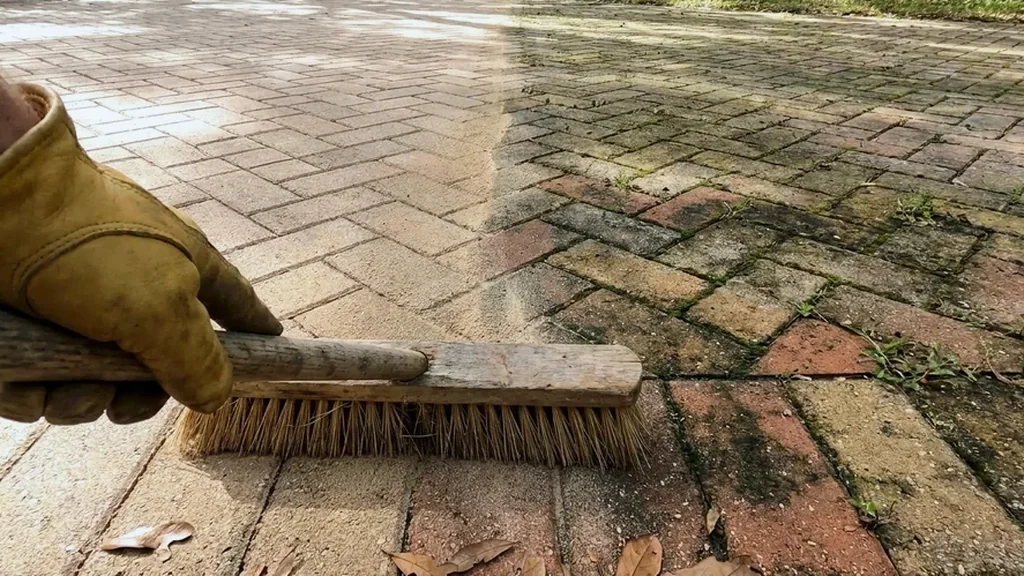
What paver problems show up most in St. Augustine?
Rain and a high tide on the same day
The city of St. Augustine says it can flood when regular rain falls at the same time as high tides, and about 90 percent of residents live in a floodplain. Standing water leaves a gray film of silt on pavers. Sealer cannot go on until the surface is dry. Flood silt has to be washed off before anything else happens. Hurricane Matthew in 2016 and Irma in 2017 both flooded parts of Davis Shores, Lincolnville and the historic districts, so many owners have seen it firsthand.
Play sand that storms and sprinklers wash out
One local paver company says most area installs used play sand, and afternoon storms and sprinklers wash it away. Open joints let weeds in and let pavers rock under foot. Fresh joint sand locked in with sealer holds up better. Sinking or rocking pavers get reset first. If the base under a paver has washed out, the contractor may need to reset a whole section instead of one stone.
Coquina, brick and stucco beside the pavers
Coquina is a porous shell rock, and Wikipedia notes that exposed coquina masonry is slowly deteriorating except in a few restored homes. A Jacksonville company says natural stone and brick take up more than concrete and call for a different sealer. Cleaners and rinse water have to be handled with care near old walls. Point out any stone you have when you ask for the quote. A penetrating sealer made for natural stone soaks in and lets the stone breathe, which can suit a walkway beside old walls.
Salt on the wind off the bay
Salt spray damage on plants is common within a couple of miles of salt water, according to University of Florida guidance. A Northeast Florida paver company says salt settles on unsealed pavers and, with sun, leaves them chalky. Pale pavers show it first. A coat slows that look from setting in. Sealing also gives pavers a surface that rinses clean more easily, which helps in a town with wind off Matanzas Bay. Driveways in full sun lose color faster than covered walks.
Green film in shaded side yards
A paver company near St. Augustine says shade and humidity grow algae and mildew in side yards and on north-facing patios. Those are also the spots with gates and tight turns, which can add prep time. Dark streaks usually come back first where the sun never reaches. Mention those spots on the first call. Sealing joint sand also discourages ants, which like open joints along shaded walls. Say where the dampest corner is so the contractor can plan extra drying time there.
Does a paver job differ in Fullerwood Park, Nelmar Terrace and Lincolnville?
Yes, because the three areas sit on different ground. Fullerwood Park lies east of San Marco Avenue on gridded streets, and its eastern edge curves along tidal marshes and Hospital Creek. Its homes are mostly one- and two-story Colonial Revival and Bungalow, and the district was listed on the National Register in 2010. Low ground beside a marsh can stay damp, so call (904) 560-7217 and tell the contractor how close you are to the creek.
Nelmar Terrace was platted in 1886 and re-platted in 1913 by the developers Fuller and Larson, who named it for Fuller's daughters. It was sold as an upscale suburb with big lots and deed restrictions, and its homes include Los Robles, a Spanish Revival house at 24 Nelmar Avenue. Big lots can mean long drives, which a quote measures by the foot. To get that number for your lot, book a free estimate.
Lincolnville was founded by freedmen in 1866 and listed on the National Register in 1991. It has narrow streets, small lots and houses built close to the street line. Tight access can mean gear is carried in by hand, which adds time. Most work in the city's historic districts needs a Certificate of Appropriateness, so check your address, then call (904) 560-7217.
What does paver sealing cost in St. Augustine?
Prices posted by Northeast Florida companies for a clean, sand and seal sit at $1.75 to $3.25 per square foot. A Jacksonville cost guide says brick, travertine and natural stone need different sealer chemistry, which raises the cost. St. Augustine yards often mix those with concrete, so the surface list matters. To see what yours would cost, book a free estimate; there is no charge for the estimate.
Access moves a quote too. A company near St. Augustine says gates and tight side yards change the price, and a Jacksonville guide says a failed coat must be stripped first. New pavers are a different case, because one local company says to wait 60 to 90 days before the first seal. Call (904) 560-7217 for a walk through which of these touch your property.
| Paved area | Typical example | Clean, sand and seal |
|---|---|---|
| 300 sq ft | Small patio or walkway | $525 to $975 |
| 600 sq ft | Two car driveway | $1,050 to $1,950 |
| 1,000 sq ft | Large driveway or pool deck | $1,750 to $3,250 |
| 1,500 sq ft | Driveway plus pool deck | $2,625 to $4,875 |
Math based on the $1.75 to $3.25 per square foot that Northeast Florida paver companies published as of November 2026. Your contractor sets the actual price after seeing the surface. Repairs, leveling and stripping failed sealer are usually extra.
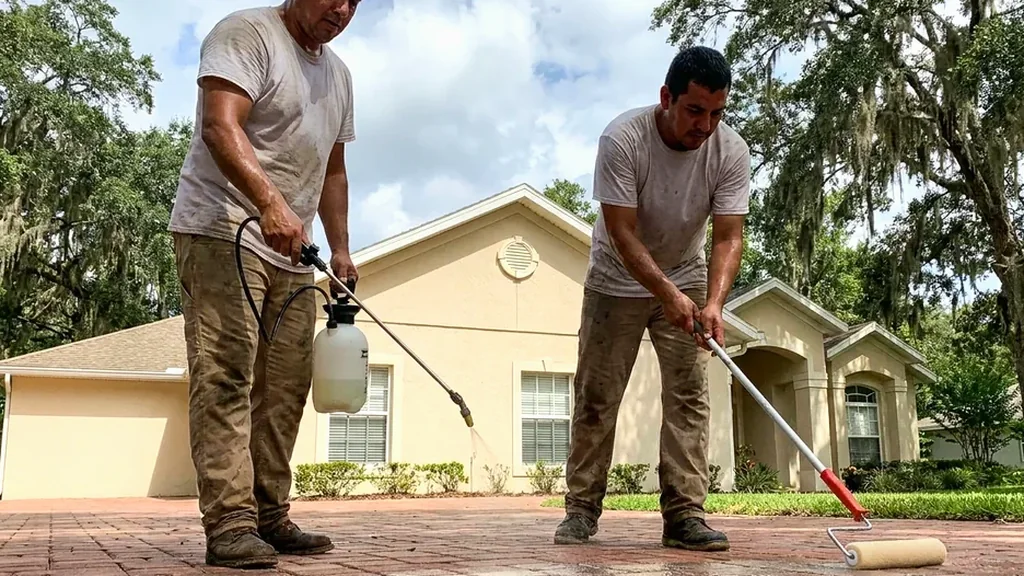
How does a paver sealing job work in St. Augustine?
Look at the surfaces and the old coat
The contractor starts by checking what your pavers are made of and where water stands. Pavers that rock, heave or sink are reset first, since sealer would hold them that way. A coat that is already down has to be identified before a product is chosen. Old coquina, brick and stucco nearby are noted so they can be protected. Photos of lifted corners help when you ask for the estimate. It also helps to say which side of the house gets the least sun.
Wash off the film and the silt
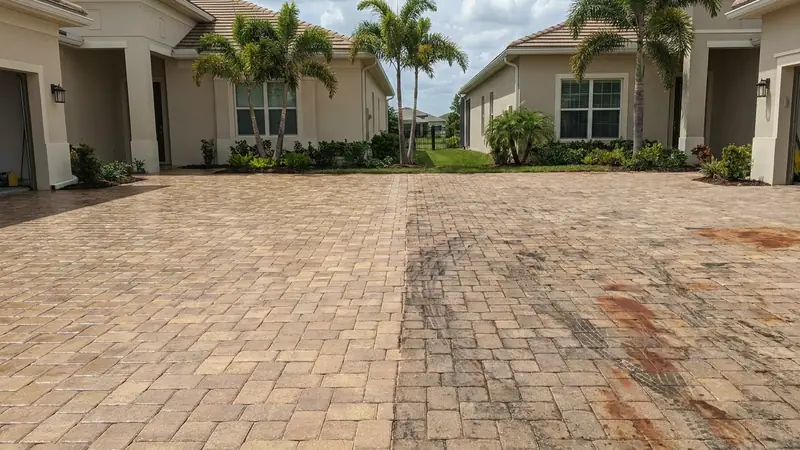
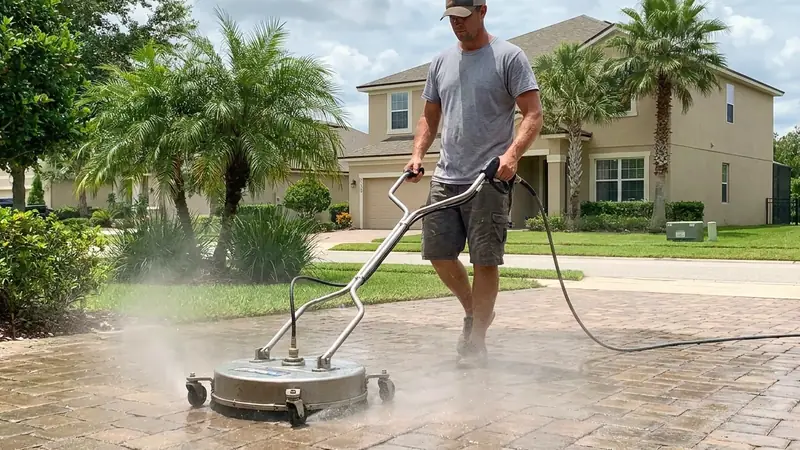
Cleaning takes off salt haze, green film, oil spots and any silt that tide or storm water left. Rinse water is kept off coquina, stucco and plants where possible. Brick and stone pavers get a gentler plan than concrete. Rust stains are treated at this step too. Pressure is set for the paver, and a wide nozzle keeps sand from being blasted out of every joint.
Replace the joint sand
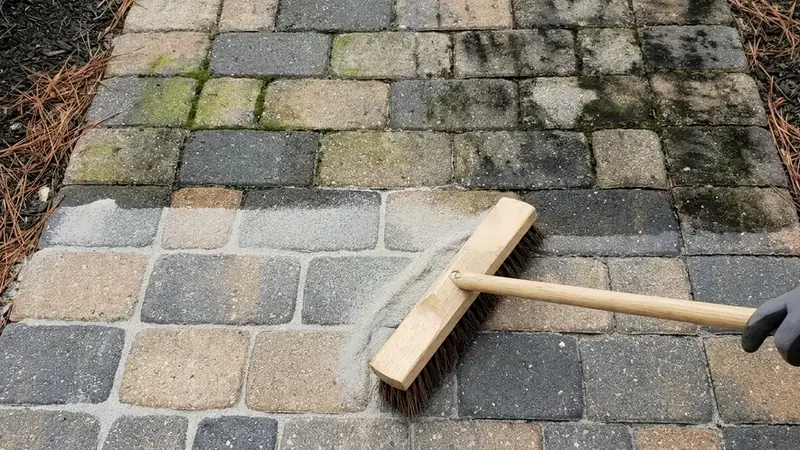
Joint sand leaves with the wash, so the contractor fills the joints again and sweeps the pavers clean. Because many local installs used play sand, this step can take longer than you expect. Full joints keep weeds out and keep pavers from rocking. Sealer then holds the sand in place. A Jacksonville company says its joint sand comes in colors that match the pavers, so ask what your quote includes.
Wait for a dry surface
Sealer needs a dry surface. In summer the contractor watches for afternoon storms, and in any season a high tide can leave a low yard wet. A wet look can turn cloudy white if it goes onto damp pavers. Waiting a day can save the whole job. Fall and winter often give the steadier stretch for this step. If rain is in the forecast, the contractor will usually offer another day instead of rushing.
Seal and keep cars off
The sealer goes on in the finish you picked, and pros usually spray it and back-roll it. A Jacksonville company says people can walk on it within a few hours but cars need about a day. Later, water that beads up shows the coat is doing its job. Water that soaks in and darkens the paver means it is time to look again. A matte finish keeps the glare down by a bright south-facing wall. Keep sprinklers off the fresh coat that first day, since wet pavers can cloud a wet look.
Complete paver services in St. Augustine
In St. Augustine the job runs wash, dry, re-sand, seal. The wash clears salt film, green growth and any silt left by high water. New sand goes in the joints once the pavers are dry, and sealer goes on last. To ask how long that takes for your yard, call (904) 560-7217.
Driveways and garage aprons take tires and sun. Courtyards and side-yard walks sit in shade and stay damp, so they turn green first. Brick and travertine are more porous than concrete and need a different product. Mention each surface you want done when you book a free estimate.
One St. Augustine company says it re-sands the joints and applies a water-based sealant. An old solvent-based coat rules out water-based sealer on top of it, so find out what is on your pavers now. A wet look shows scuffs sooner than matte, and matte keeps pavers from outshining old masonry beside them. Call (904) 560-7217 to choose a finish.
The city's dry season runs November through April, and long rainless stretches are common in those months. The hot, wet season runs May through October, with brief heavy downpours and daily thundershowers in summer. Late fall to spring is the easier time to get a dry surface, though a king tide can still flood a low yard. To pick a date, book a free estimate.
Questions to ask before you hire
- Should I pick a matte finish or a wet look for my pavers?
- Do you reset the sunken or loose pavers near my oak tree roots first?
- Do I need to be home while the work gets done?
- Can you send proof of insurance before the job starts?
- What happens to the job if rain is in the forecast that day?
- Will the quote spell out the cleaning, the joint sand and the sealer?
- Can you deal with white haze on my pavers before you seal?
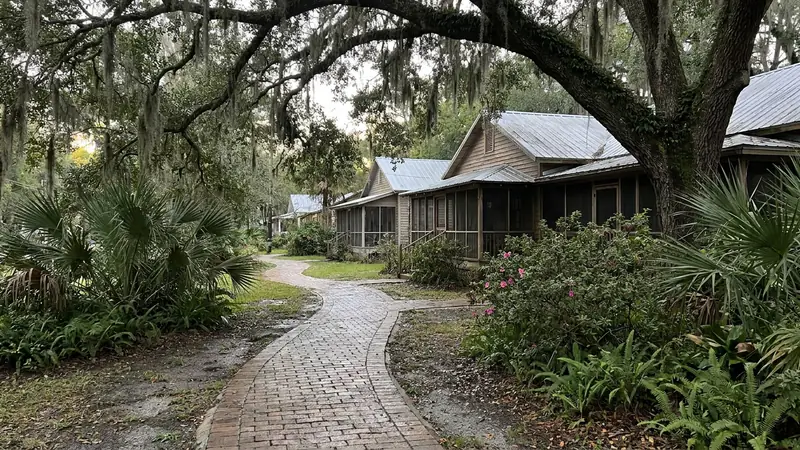
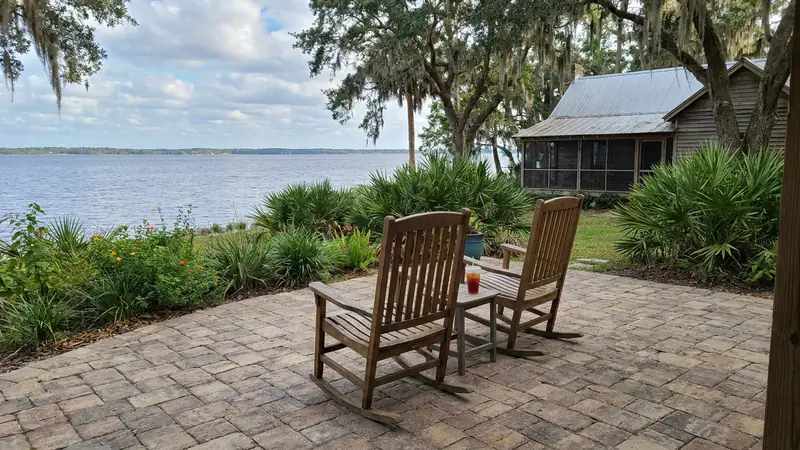
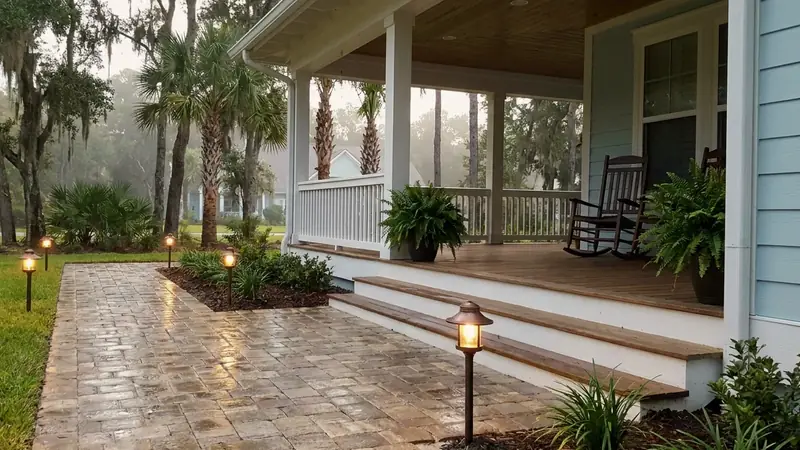
What do sealed pavers look like around St. Augustine?
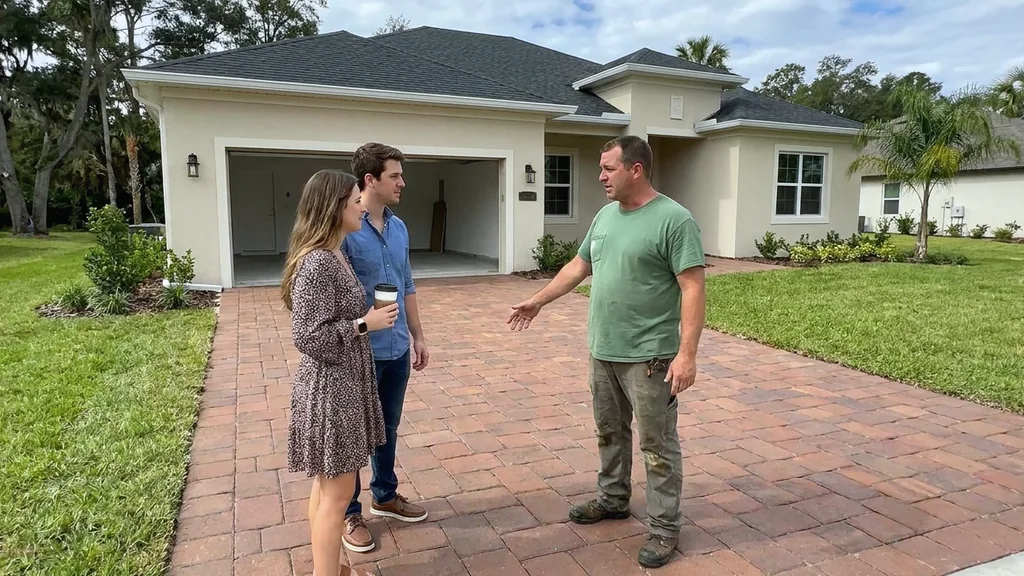
Why local matters in St. Augustine
A contractor who works St. Augustine plans around the tide chart as well as the rain. The city says regular rain and high tides together can flood streets and yards. That is why a local pro asks whether your lot took water last time. To reach one, call (904) 560-7217.
Local knowledge also covers the old districts. The city requires a Certificate of Appropriateness for most work in its five historic preservation districts, and replacing features with matching materials may be approved administratively. A contractor who knows the districts will tell you to check your address first. To see how that fits your job, book a free estimate.
Old masonry is another reason. Coquina, lime plaster and old brick react to cleaners and rinse water in ways concrete does not. A local contractor will ask what sits beside your pavers before choosing a wash plan. If you have stone walls, call (904) 560-7217.
Why does St. Augustine's age matter for paver sealing?
Because the city has been laying paving for a long time. St. Augustine was founded on September 8, 1565, and archaeology on its downtown streets found that brick followed compacted shell, compacted earth and cypress pavers as the first permanent street material. The city adopted a policy in 2008 to repair and replace its remaining brick streets. If you live near one, book a free estimate.
Landmarks carry the same story of old masonry. The Castillo de San Marcos is built of coquina, Flagler College occupies the former Ponce de Leon Hotel, and the Lightner Museum fills the former Hotel Alcazar. The Bridge of Lions carries State Road A1A over Matanzas Bay, and the Nights of Lights festival lights the historic district each holiday season. Close to one of these places, call (904) 560-7217 and tell the contractor where you are.
Frequently Asked Questions
Is it good to seal pavers in Florida if your home is in St. Augustine?
Yes for most homes. A St. Augustine paver company says sealing protects against stains, fading and erosion, though it is not required. Tides, summer downpours and salt air all push on pavers here, so a coat earns its keep. Ask the contractor what the coat should do for your surface.
In St. Augustine, can I pressure wash brick pavers?
A trained pro can, with care. Pressure matters: a trade supplier puts the limit near 3,000 PSI on standard concrete pavers, above which the surface can strip, and brick and stone are more porous than concrete too. Ask the contractor how the pressure is set for your paver and how nearby coquina and stucco stay protected. Washing also removes joint sand, which is replaced before sealing.
In St. Augustine, how long do paver sealers last?
Most sealers get a fresh coat every two to five years, going by what companies quote. One St. Augustine company suggests a yearly look and a reseal every 2 to 3 years, while another says every 3 to 5 years. Traffic, shade and weather decide where yours falls. Beading water is the sign the coat is still doing its work.
In St. Augustine, how much does it cost to clean and seal pavers?
Budget $1.75 to $3.25 per square foot, which is the span companies here post for a full job. Brick, travertine and stone can price higher because they need different sealer chemistry. Have the area written on the quote. New pavers and failed old coats change the plan.
Do I need city approval to seal pavers in St. Augustine's historic districts?
It depends on your address. Most work inside the city's five historic preservation zoning districts needs a Certificate of Appropriateness. Matching replacements may be approved administratively, so check the city's map and ask staff about sealing before you book. The review board meets monthly, so allow time.
When should new pavers be sealed in St. Augustine?
Wait about 60 to 90 days, according to one St. Augustine paver company. Efflorescence, a temporary white film, often shows in the first or second season. Sealing too early can lock it in under the coat. Ask your installer for the wait they advise.
Does tide flooding change when pavers can be sealed in St. Augustine?
Yes. The city says rain and high tide together can flood it, and Hurricane Matthew flooded Davis Shores, Lincolnville and the historic districts in 2016. Sealer needs a dry surface, so the contractor waits until the lot has drained and dried. A low yard may need an extra day.
Can pavers beside coquina or old brick be sealed in St. Augustine?
Yes, with a plan. A Jacksonville company says brick, natural stone and travertine need different sealer chemistry than concrete. The contractor should tell you which product goes where and how rinse water stays off old walls. Rinse water and cleaners need care near coquina.
Ready for a Free Estimate in St. Augustine?
Call (904) 560-7217 and tell us about your pavers.
Free, no obligation